

Evolving Landscape of Eco-Tourism
Tourism is responsible for about 10% of global greenhouse gases as per the 2018 study published in the Nature Climate Change.
Segment-wise breakdown is as below:
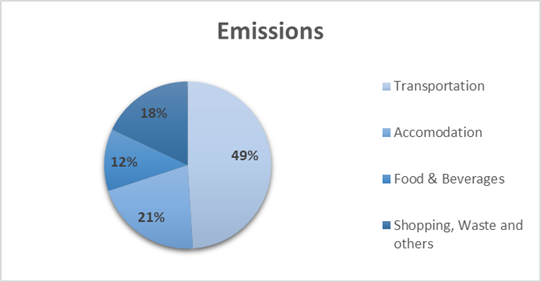
Increasing travel demands are further accelerating the emissions. Lack of sound measures will only double the tourism related emissions by 2050.
The major challenges come from:
- Luxury tourism
- Slow adoption of green technologies in aviation and hospitality industries
- Inefficient carbon offsetting program
With challenges come the opportunities-
- Eco-Tourism
- Adoption of sustainable technologies by the hospitality industry like more renewable energy, circularity in waste water, food waste and other waste generated.
- Running and supporting sustainable businesses
In this article we shall explore how eco-tourism is evolving and its reflection in the hospitality industry.
As we know, eco-tourism is a nature-based tourism focused on sustainability and ecological preservation with focus on protecting natural landscape and promoting green growth. In other words, it is a niche tourism in natural areas with the objective of protecting the environment and communities.
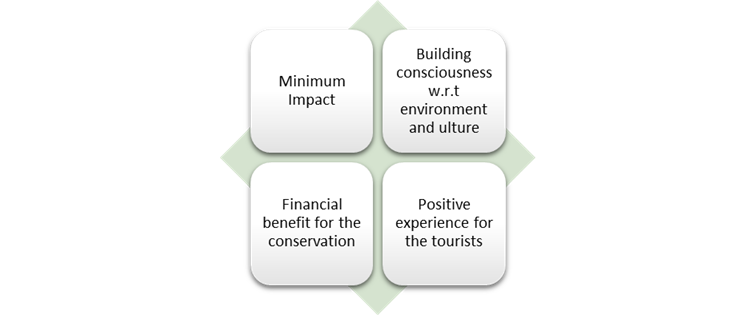
Eco-Tourism works on a few principles, being:
So where does Eco-Tourism stand today?
In 2019 the industry generated more than $181 billion and in 2024 it was valued at $185-200 bn, and experts project that its popularity will only keep growing in the coming years. It is no longer niche, growing at 15-20% annually and is projected to reach $330 bn by 2030.
The key trends being observed are:
- Carbon Conscious Travellers: Platforms like TripZero help offset travel emissions
- Green Certifications- eco labelled hotels, tour operators and airlines. Six Senses and Al Moha Desert in Dubai have attained eco-labels
- Regenerative tourism: involves travellers actively participating in environmental restoration, such as coral planting in Dubai Reefs Project
- Digital Transparency
- Eco Friendly practices in the hospitality Industry
Let’s dive into the Eco-Friendly practices adopted by hospitality industry.
The industry has transformed in recent years as a result of eco conscious travellers. As a result, the hospitality industry is focusing on:
- Sustainable Design and Construction: incorporating energy efficient systems, using renewable materials for construction, optimization of natural light and ventilation
- Energy and Water Conservation: use of renewable energy, renewable energy storage systems, water efficient systems
- Waste Management and Recycling: Composting organic waste, avoiding use of single use plastics, water treatment
- Sustainable Food and Beverages Practices: supporting sustainable farming practices, recycling food waste.
These practices not only reduce environmental footprint, but, focus remains on running the businesses sustainably.
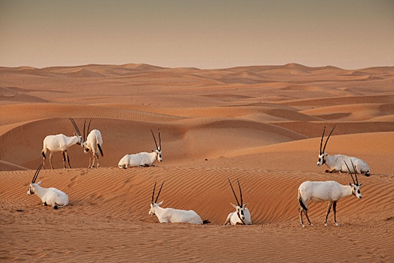
Major destinations embracing eco-tourism are New Zealand, Costa Rica, Bhutan, Norway and Kenya and others like UAE are rising fast. Dubai itself has quite a few initiatives running to foster its eco tourism and a few sustainable efforts like: Dubai Dessert Conservation Reserve- first protected desert area
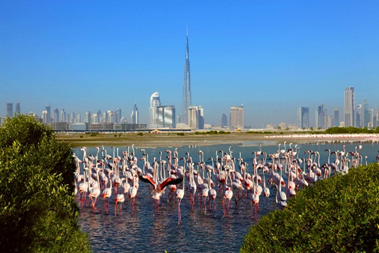
Ras Al Khor Flamingo Sanctuary & Turtle Rehab Centre-a protected wetland
- Dubai Sustainable Tourism launched green standards to help hospitality industry reduce its energy, water and waste.
- Green Certified Hotels- adoption of certifications like Green Globe, biodigesters, vertical farms to name a few.
- Sustainable mobility- EV infrastructure and Green City
The UAE boasts one of the largest ratios of protected areas per land mass in the world. On average, protected natural areas listed by 130 countries worldwide constitute just five percent of the total surface of the earth. However, in the UAE, protected areas account for 14 percent of the entire country.
Tech in Eco-Tourism: Dubai’s Smart Leap
Yousuf Lootah, Acting CEO of Corporate Strategy and Performance, Dubai Department of Economy and Tourism said “As part of our efforts to transform Dubai into a leading sustainable tourism destination. the Dubai Sustainable Tourism Stamp champions sustainable practices while setting a benchmark for excellence in environmental stewardship, aligned with the goals of the Dubai Economic Agenda 2033. By recognising these exemplary establishments, we are encouraging others to follow suit and embrace sustainable initiatives that not only benefit their businesses but also contribute to the collective well‑being of our city and the world at large.”
Dubai’s tech driven Eco Tourism initiatives include:
- IoT-based energy tracking in green hotels
- Solar-powered desert safari camps
- AI-powered visitor monitoring in conservation areas
- EV expansion and smart mobility corridors
- AR/VR experiences in protected reserves and museums
While New Zealand and Costa Rica focus on untouched nature and biodiversity, Dubai blends sustainability with ultra-modern luxury—positioning itself as a high-tech, desert-based eco-tourism hub.
With protected reserves, green-certified hotels, solar-powered cultural camps, massive reef regeneration, mangrove forests, and sustainable mobility—all tied into national sustainability goals—it’s fast emerging as a global model for luxury-meets-environmental stewardship.
As climate goals become increasingly urgent, eco-tourism is shifting from optional to essential. With innovative practices, government backing, and a growing eco-conscious tourist base, Dubai is well-positioned to not only participate in this green wave—but can lead it.