Ocean Conservation Tech: Innovations Protecting Marine Life
Oceans cover more than 70% of the Earth’s surface, produce over half of the world’s oxygen, and absorb nearly 30% of global carbon dioxide emissions. Yet today, they are under unprecedented pressure.
From overfishing and plastic pollution to rising sea temperatures and ocean acidification, marine ecosystems are being pushed toward irreversible damage.
In response, a new wave of ocean conservation technology is emerging — combining data, artificial intelligence, robotics, and biotechnology to protect marine life at scale.
As businesses and governments move toward sustainable and climate-resilient systems, explored in Green Hydrogen: The Next Big Energy Revolution, protecting ocean ecosystems is becoming a global priority.
How Technology Is Combating Illegal Fishing and Protecting Marine Life
Illegal, unreported, and unregulated (IUU) fishing is one of the biggest threats to ocean biodiversity, costing billions annually and depleting global fish populations.
Traditionally, monitoring fishing activity relied on patrol vessels — expensive and limited in reach.
Today, AI-powered satellite tracking systems are transforming ocean monitoring.
These systems:
- Track vessel movements in real time
- Detect suspicious patterns like route deviations or signal shutdowns
- Flag potential illegal fishing activities
This data-driven approach allows authorities to act faster and more effectively without needing constant physical surveillance.
Beyond enforcement, this transparency supports sustainable fisheries and coastal communities, aligning with broader sustainable business practices.
Ocean Plastic Pollution Solutions and Cleanup Technologies
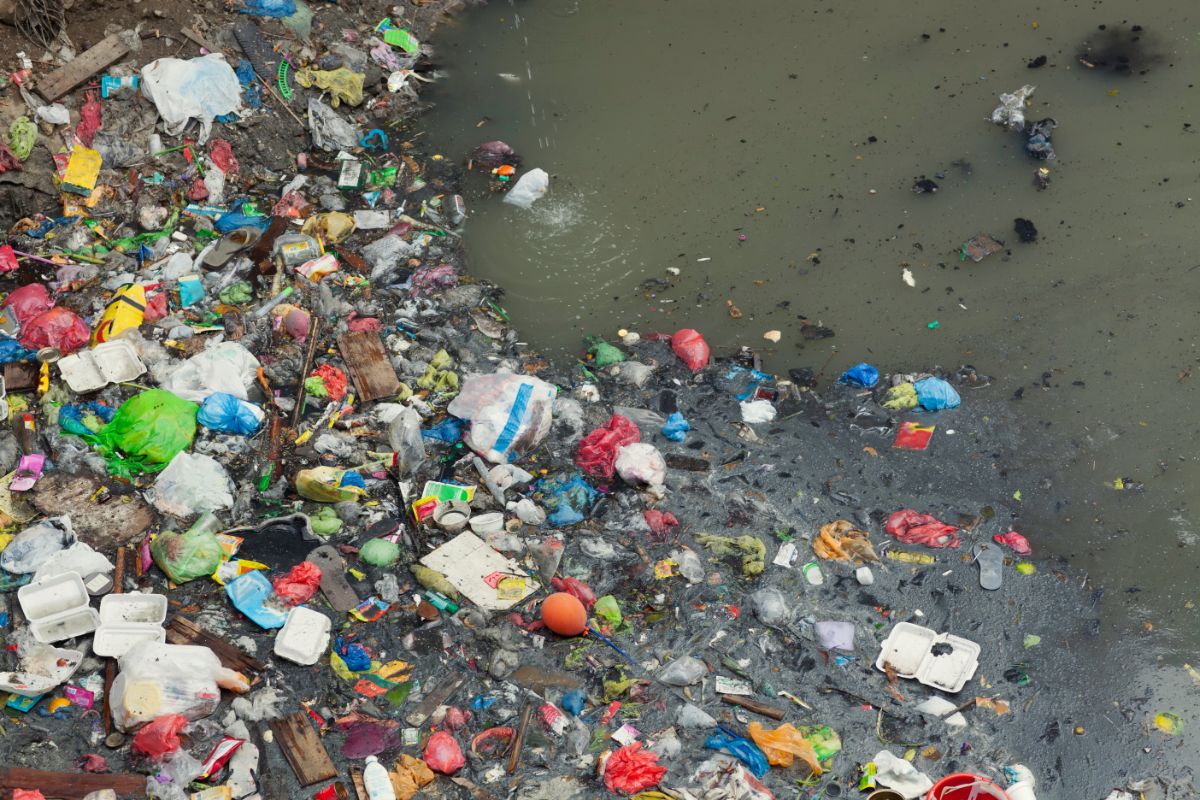
Every year, an estimated 8–10 million tons of plastic waste enter the oceans. Over time, this plastic breaks down into microplastics, contaminating marine ecosystems and entering the food chain.
To tackle this crisis, innovative technologies are being deployed at multiple levels.
Ocean Cleanup Systems
Autonomous systems are designed to collect plastic waste from ocean gyres where debris accumulates.
River Interception Technologies
Since most ocean plastic originates from land, river-based systems stop waste before it reaches the sea.
Sustainable Material Innovation
The shift toward biodegradable and ocean-safe materials is reducing plastic pollution at the source.
This transition connects directly to circular economy principles, discussed in What Is the Circular Economy & Why It’s the Future of Sustainable Business, where waste is minimized through smarter design.
Marine Ecosystem Monitoring Using AI and Ocean Data Technology
Coral reefs support nearly 25% of all marine species, yet they are highly vulnerable to climate change.
Modern ocean conservation technologies are giving researchers powerful new tools to monitor and protect marine ecosystems.
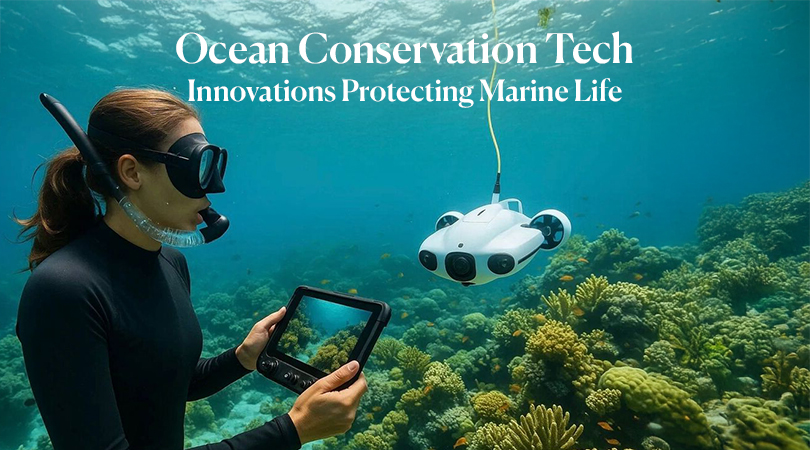
Underwater Drones and Imaging
High-resolution underwater drones capture detailed images of coral reefs and marine habitats.
AI and Machine Learning
Machine learning models analyze reef health, track biodiversity, and detect early signs of coral bleaching.
Ocean Data Buoys
Smart buoys measure:
- Water temperature
- Ocean acidity
- Oxygen levels
This real-time data improves climate modeling and helps scientists predict environmental changes more accurately.
Some projects are even developing heat-resistant coral species, increasing resilience against rising ocean temperatures.
Sustainable Shipping Technology and Ocean Protection
Global shipping contributes around 3% of greenhouse gas emissions and significantly impacts marine ecosystems through noise pollution and collisions with marine animals.
New technologies are helping reduce these impacts.
Smart Route Optimization
AI-based systems optimize shipping routes to reduce fuel consumption and emissions.
Wildlife Protection Systems
Ships can adjust speeds in sensitive marine zones to reduce the risk of whale collisions.
Cleaner Maritime Energy
The shift toward low-emission fuels and electrification is supporting the transition to sustainable ocean transport systems, closely linked to innovations in Renewable Energy Storage: The Future of Green Batteries.
The Role of Ocean Conservation Tech in Sustainable Business
Ocean conservation technology does not exist in isolation.
It intersects with:
- Climate policies
- Sustainable supply chains
- Circular economy strategies
- ESG reporting and transparency
Technologies like blockchain and AI are also improving traceability and accountability across industries, as explored in Blockchain for Sustainability: Tracking Carbon & Supply Chains.
This systems-level approach ensures that ocean conservation becomes part of broader sustainability transformation strategies.
Why Protecting Oceans Is Critical for Climate and Economy
Oceans are often described as the planet’s largest life-support system.
They:
- Regulate global climate
- Support marine biodiversity
- Sustain industries like fisheries and tourism
Protecting oceans is not just an environmental issue — it’s an economic and strategic priority.
Investing in marine technology helps:
- Reduce climate risks
- Protect natural resources
- Ensure long-term economic stability
As climate challenges intensify, safeguarding ocean ecosystems becomes essential for building a resilient and sustainable global economy.
The Future of Ocean Conservation Technology
The future of ocean sustainability will be shaped by innovation.
From AI-powered monitoring systems to biodegradable materials and clean shipping technologies, innovation is transforming how we protect marine ecosystems.
However, technology alone is not enough.
Effective ocean conservation will require:
- Strong policies
- Global collaboration
- Community engagement
- Responsible business practices
The next decade will define how successfully we can protect our oceans.
And increasingly, that effort will be powered by technology, data, and sustainable innovation beneath the surface.
FAQs
Ocean conservation technology includes tools like AI, drones, satellite tracking, and data systems used to monitor, protect, and restore marine ecosystems.
Technologies like ocean cleanup systems, river waste interceptors, and biodegradable materials help reduce plastic pollution and prevent waste from entering oceans.
Yes. AI is used to monitor fishing activity, track marine biodiversity, detect coral bleaching, and improve conservation strategies.
Oceans regulate climate, absorb carbon emissions, and support biodiversity. Protecting them is essential for maintaining environmental balance and economic stability.
Businesses can reduce plastic use, adopt sustainable supply chains, invest in clean technologies, and support ocean-friendly policies.