Will Sharjah Be the New Sustainable City?
Imagine stepping onto a balcony just after dawn. The desert air is cool for a fleeting moment, and every rooftop in sight is already hard at work: slim solar tiles catch first light, quietly filling household batteries before the day turns hot. A neighbour strolls by with a basket of cherry tomatoes that never saw a delivery truck—they were picked moments ago from the greenhouse behind her kitchen. In the courtyard below, reclaimed water drips onto a flowering vine, a small but telling miracle in a region more famous for rolling dunes than geraniums.
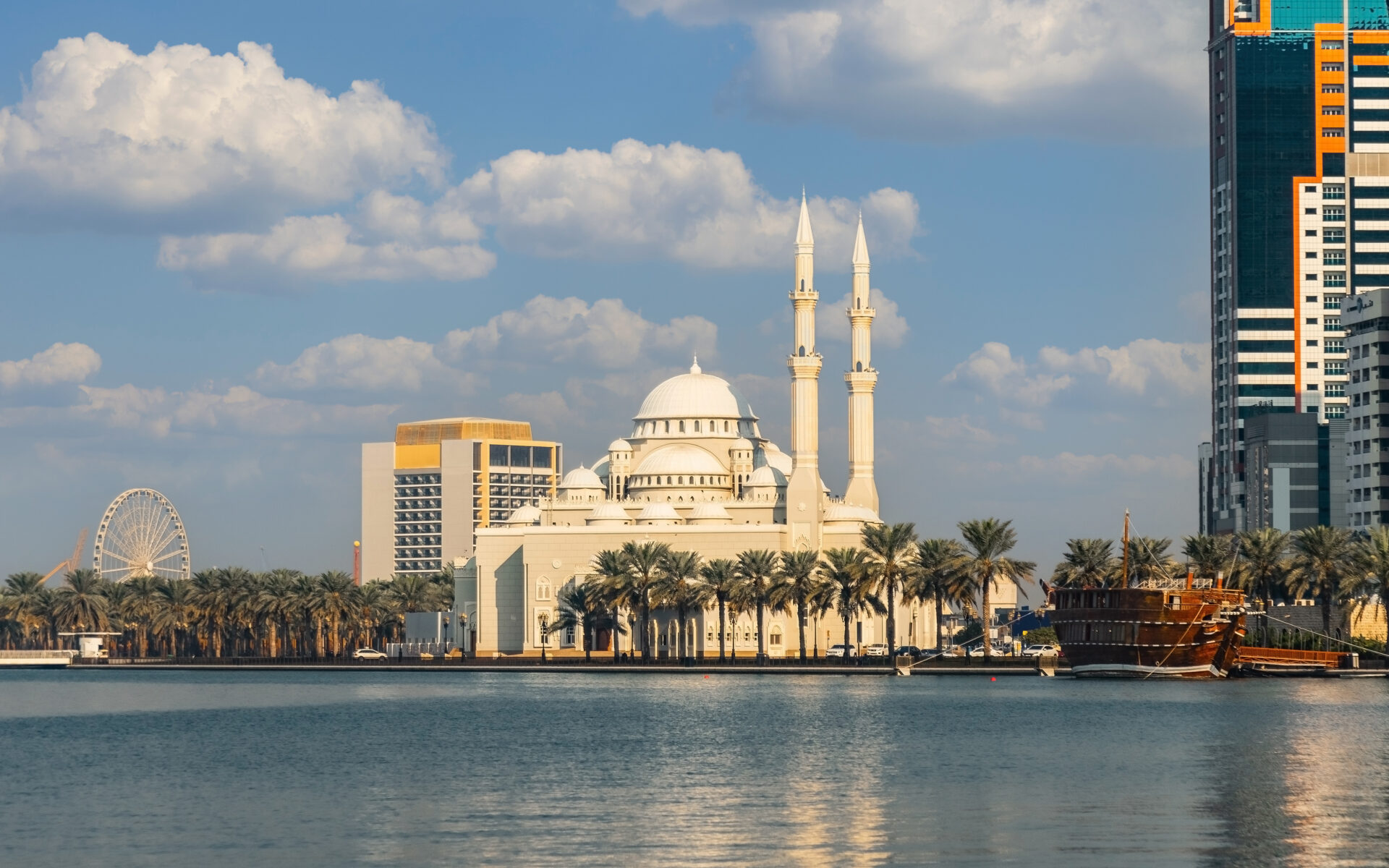
This scene isn’t borrowed from a sci‑fi screenplay. It is in an unfolding stage, in real time, inside Sharjah’s upcoming “Sustainable City”—an ambitious development on the edge of one of the UAE’s most traditional‑bound emirates. At a moment when city leaders worldwide wrestle with the double mandate of cutting carbon and keeping citizens satisfied, Sharjah is betting big on a blueprint that says you can, in fact, do both.
From bold idea to bricks and mortar
The project took shape through an unusual marriage of public vision and private execution. The Sharjah Investment and Development Authority (Shurooq) teamed up with Diamond Developers to carve 1,250 homes out of 7.2 million square feet of desert. Price tag: roughly AED 2 billion (about US $544 million). In a market famous for speculative launches, this one has substance: more than AED 2.5 billion in sales are already on the books, spread across four phases that sold faster than many conventional developments.
That response says something about the shifting tastes of Gulf‑region homebuyers. Solar panels, grey‑water loops, shaded walking paths, and organic markets used to be nice‑to‑have talking points. Today, they are showing up on buyers’ must‑have lists—evidence that climate consciousness is no longer the preserve of policy wonks.
Nature as infrastructure
Sharjah’s leaders understood early that a handful of net‑zero villas would not, on their own, make a sustainable city. Roughly 4.6 percent of the emirate’s land is now set aside as nature reserve—mangrove lagoons along the coast, desert wadis inland, and the wetlands of Wasit and Kalba that pull in migratory birds by the thousand. Protecting these areas is partly ecological housekeeping; it is also shrewd economics. Birdwatchers, kayakers, and school groups bring revenue and raise awareness, knitting conservation into everyday life rather than quarantining it behind park fences.
Food, too, is getting a makeover. Sharjah’s interior bread‑basket—the Al Dhaid plain—has seen a quiet surge of organic farms. The distance from field to table is measured in minutes instead of miles, trimming emissions that normally hide in refrigerated trucks and cargo holds.
When smart tech does the heavy lifting
Hardware alone rarely moves the needle; data makes it dance. Across the emirate, AI‑enabled traffic lights smooth the morning commute, while Internet‑of‑Things sensors monitor everything from soil moisture to street‑lamp output. Inside homes, smart meters turn electricity and water consumption into real‑time feedback. Residents don’t need a lecture on sustainability—the dashboard on their phone does the coaching.
Waste is handled with similar rigour. The Sharjah Waste‑to‑Energy plant—built by BEEAH Group and Masdar—processed its first 100,000 tonnes in year one and kept nine in ten kilograms out of landfills. That 90 percent diversion rate is the new regional yardstick.
The hard parts no one can ignore
None of this is easy, and Sharjah’s planners know it. Desert heat drives relentless demand for air‑conditioning; water scarcity never rests; and the wider Gulf economy is still anchored to hydrocarbons. Scaling the Sustainable City model from a tidy enclave to an entire metropolis will stretch power grids, budgets, and political patience.
Affordability is another watchpoint. Villas start at roughly AED 506 per square foot—sharply priced for the UAE but still out of reach for many. If sustainability is to be more than a premium add‑on, future phases must cater to a broader income mix.
Replication poses its own puzzle. Technology that works in cash‑rich Sharjah may stumble in less affluent neighbours. The emirate could turn that hurdle into an export opportunity by incubating low‑cost, high‑impact solutions—think modular cooling systems or solar‑powered micro‑grids—and sharing them across the region.
Money and mandates: the long game
Sharjah’s 2025 budget weighs in at a record US $11.43 billion, with sustainability projects claiming a larger slice than ever. Layer on the UAE’s federal plan to channel AED 1 trillion into green finance by 2030, and the funding pipeline looks robust.
Policy scaffolding is solid, too. Sharjah Sustainable City aligns neatly with the UN’s Sustainable Development Goals, especially SDG 7 (clean energy) and SDG 11 (sustainable cities). Alignment, however, is not an accomplishment. Cities such as Amsterdam and Copenhagen earned their reputations through decades of iterative improvements. Sharjah must prove it can do the same, and do it in a harsher climate with faster population growth.
What success could look like
If Sharjah pulls this off—scales the technology, broadens access, and keeps governments and investors patient—it will have built more than a green precinct. It will have drafted a playbook for how desert cities everywhere can thrive after oil.
Even in its pilot stage, the project offers a glimpse of that future: utility bills that trend downward, children who learn to compost before they can multiply, visitors who arrive for the beaches and leave talking about waste diversion statistics.
Will Sharjah become the world’s next poster‑child for sustainable urban living? The honest answer is that the jury is still out. But the early evidence is encouraging: real sales, measurable carbon cuts, rising public interest. For now, the Sustainable City stands as a vivid reminder that the journey to net‑zero need not be grey and sacrificial. It can be sunny, verdant, and—if Sharjah stays the course—surprisingly profitable.