
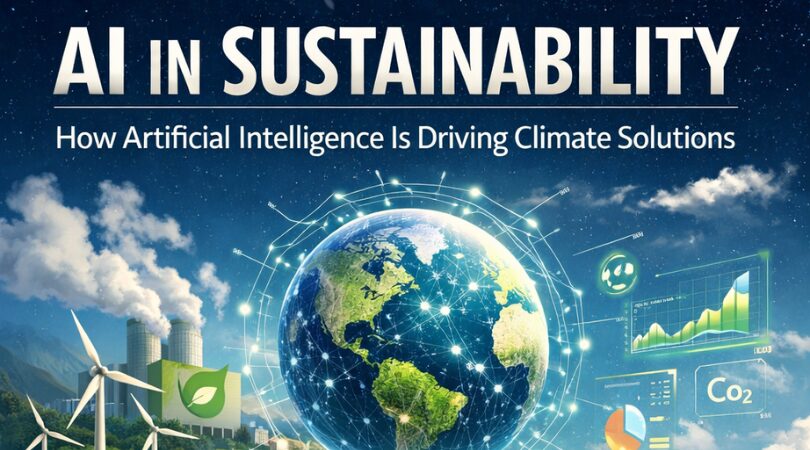
AI in Sustainability: How Artificial Intelligence Is Driving Climate Solutions
Artificial Intelligence (AI) is transforming the world at an unprecedented pace. It has reshaped how we perform even the simplest daily tasks—from writing assignments to creating reports—and has become deeply embedded in our personal and professional lives. Beyond convenience and productivity, AI is now emerging as a powerful force in addressing one of humanity’s most urgent challenges: climate change and environmental sustainability.
The planet has already crossed its first major climate tipping point due to rising greenhouse gas emissions. Warm-water coral reefs are in long-term decline, threatening biodiversity and the livelihoods of more than 500 million people worldwide. As climate risks intensify, it is critical to deploy every available tool to reduce emissions, adapt to climate impacts, and protect natural systems. This is where green AI, climate tech innovation, and data-driven sustainability solutions can make a meaningful difference.
How AI Provides Climate Solutions
AI is far more than conversational tools like Gemini or ChatGPT. Advanced platforms such as IBM Watson AI, Microsoft AI, and emerging solutions developed by climate tech startups are being used to analyze environmental data, predict climate patterns, and optimize resource use across industries.
AI for sustainability works by collecting and processing vast amounts of data—from satellite imagery and weather systems to energy grids and supply chains. By identifying patterns and making accurate predictions, AI enables smarter decision-making, helping governments and businesses reduce emissions, conserve resources, and improve climate resilience.
Using AI for Driving Climate Solutions
Climate technology powered by AI has the potential to be a game-changer. Below are key industries where AI-driven climate solutions are already making an impact.
Transportation and Logistics
Fossil fuels such as coal, oil, and gas are non-renewable, and their depletion continues at a rapid pace. Reducing fuel consumption is essential for lowering carbon emissions, and AI plays a crucial role in this effort. AI-based route optimization can reduce fuel use by up to 15% by identifying faster routes, avoiding traffic congestion, and improving delivery planning. It also supports electric vehicles and autonomous driving systems by optimizing battery usage and energy efficiency.
Energy and Utilities
AI helps improve energy efficiency and grid reliability. By forecasting energy demand, AI enables utilities to balance supply and demand more accurately, reducing waste. It also supports the integration of renewable energy sources such as solar and wind by predicting weather conditions and power generation levels. In smart grids, AI can detect energy losses and recommend corrective actions, leading to lower emissions and operational costs.
Agriculture
Agriculture is the foundation of human civilization, yet it faces growing challenges due to climate change, water scarcity, and soil degradation. Green AI enables precision agriculture by helping farmers use water, fertilizers, and pesticides more efficiently. AI-powered monitoring systems can detect plant diseases early through image recognition, reducing crop losses and improving food security while minimizing environmental impact.
Construction and Real Estate
AI contributes to the development of smart, energy-efficient, and sustainable buildings. From design to operation, AI can optimize energy usage, reduce water consumption, and minimize material waste. Smart building systems powered by AI can lower energy consumption by up to 30%, making buildings healthier, more cost-effective, and environmentally friendly throughout their lifecycle.
Industry and Manufacturing
In industrial and manufacturing settings, AI improves efficiency while reducing waste and emissions. AI-driven systems can monitor equipment performance, predict maintenance needs, and optimize production processes.
This leads to reduced energy consumption, lower pollution levels, and increased use of recycled and reusable materials—key principles of a circular economy.
How AI Is Negatively Impacting Sustainability
Despite its advantages, AI also presents sustainability challenges. Large AI models and data centers consume enormous amounts of electricity, often powered by fossil fuels. According to recent estimates, global data centers account for nearly 1–2% of total electricity use, contributing significantly to carbon emissions.
Additionally, AI hardware relies on resource-intensive components, increasing electronic waste and environmental strain.
Without responsible design and governance, AI systems can unintentionally undermine sustainability goals.
Making AI More Sustainable
The solution lies in developing energy-efficient, resource-conscious AI systems. Practical steps include:
- Using smaller, optimized AI models that require less computational power
- Powering data centers with renewable energy sources such as solar and wind
- Recycling and reusing AI hardware to reduce electronic waste
- Supporting green computing practices and responsible AI development
Conclusion: AI as a Catalyst for a Sustainable Future
AI is not a silver bullet for climate change, but it is a powerful catalyst for progress. When combined with climate-focused policies, renewable energy, and innovation from climate tech startups, AI can accelerate the transition to a low-carbon, sustainable future. The key lies in using AI responsibly—maximizing its environmental benefits while minimizing its ecological footprint.
As climate challenges grow more complex, leveraging AI for sustainability is no longer optional. It is an essential step toward protecting ecosystems, strengthening economies, and ensuring a livable planet for future generations.
AI for sustainability refers to the use of artificial intelligence to address environmental challenges such as climate change, energy efficiency, resource management, and emissions reduction. By analyzing large datasets and predicting patterns, AI helps organizations make smarter, data-driven decisions that support long-term environmental goals.
AI helps fight climate change by optimizing energy consumption, improving renewable energy integration, reducing waste, and lowering carbon emissions. It is used in areas such as smart grids, precision agriculture, sustainable transportation, and climate modeling to improve efficiency and resilience.
Industries that benefit most include transportation, energy and utilities, agriculture, construction, manufacturing, and real estate. In each of these sectors, AI helps reduce emissions, improve efficiency, and support sustainable practices.
The future of AI in climate action lies in responsible innovation. As AI becomes more efficient and accessible, it will play a larger role in climate mitigation, adaptation, and resilience—especially when combined with strong policies, renewable energy, and global collaboration.