

Silent Fallout: War’s Lasting Environmental Damage
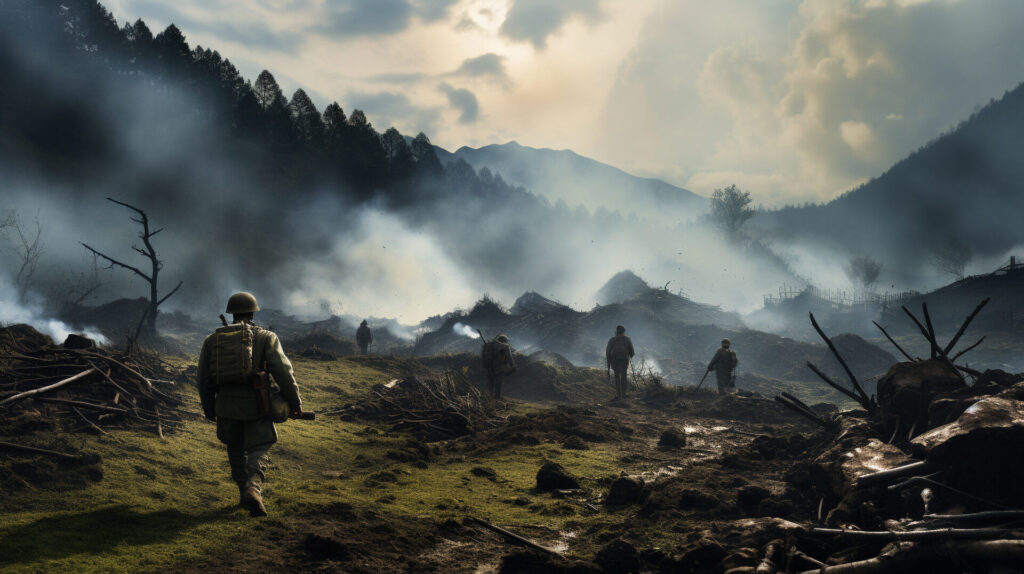
The headlines of war rarely show what happens beyond the blast zone. Yet recent conflicts in Ukraine, Gaza, Yemen, and Sudan reveal a quieter casualty: the environment. Tanks plough through farmland, artillery lights up oil depots, and forests burn in the crossfire. Long after cease-fires are signed, rivers still run black, wildlife has vanished, and the climate balance sheet carries the scars. The environmental price of conflict is no footnote. It is a strategic risk that reshapes local economies, upends global carbon goals, and complicates already-fragile supply chains.
A carbon bill few nations count
Modern armies run on fossil fuel. Main battle tanks can consume hundreds of litres of diesel per hour, and fighter jets burn through tonnes of aviation fuel on a single sortie. By one estimate, military activity is responsible for roughly 5.5 percent of global greenhouse-gas emissions— a share larger than that of many entire nations. Active combat magnifies the load. During the first three years of Russia’s invasion of Ukraine, warfare released about 230 million tonnes of CO₂-equivalent, comparable to the annual emissions of several European economies combined. In practical terms, every extended campaign widens the gap between national climate pledges and the realities on the ground.
Toxic debris that lingers for decades A city reduced to rubble is more than a humanitarian crisis; it is a hazardous-waste site. Pulverised concrete, twisted metal, and shattered glass are often laced with asbestos, heavy metals, and residual fuel. In Gaza and Ukraine alone, fighting has produced tens of millions of tonnes of debris. Each shell crater can contain lead or depleted uranium that leaches into soil and groundwater, threatening food security far beyond the front. Strikes on refineries or fuel depots add another layer of risk, spilling petrochemicals into rivers and farmland. Meanwhile, damaged wastewater systems send untreated sewage downstream, accelerating the spread of disease.
Wildlife caught in the line of fire
Conflict zones are magnets for illegal logging, poaching, and land grabbing. Ranger patrols dwindle, law enforcement collapses, and armed groups exploit resources to finance operations. Forests become collateral damage, stripped for firewood or cleared to create lines of sight. In Ukraine, military activity has affected roughly 30 percent of the country’s protected areas, disrupting migratory paths and fragmenting habitats built over centuries. The destruction of a major dam in 2023 sent contaminated floodwaters across wetlands before dumping them into the Black Sea, a blow to fish stocks and coastal tourism alike.
Rebuilding without repeating the past
Once guns fall silent, the to-do list is formidable: clear unexploded ordnance, dispose of rubble safely, restore services, and revive local livelihoods. Yet the urgency to rebuild can sideline environmental safeguards. Without strong governance, opportunistic deforestation and unregulated mining often surge. Landmines and toxic hotspots keep farmers from their fields, driving food shortages and prolonging dependence on aid. Left unaddressed, these pressures can lock fragile states into a cycle of ecological decline and social instability.
Encouraging signs are emerging. Legal scholars and activists are pressing for “ecocide” to be recognised as an international crime, raising the prospect of accountability for large-scale environmental destruction. Some recovery programmes now weave green objectives into peacebuilding: replanting mangroves that buffer storm surges, installing solar micro-grids to cut diesel imports, and coordinating cross-border river clean-ups that bring former adversaries to the same table.
Why this matters for business and policy When the fighting stops, the environmental fallout remains. Nations emerging from war face enormous challenges in cleanup and restoration. Millions of tons of rubble must be collected and safely disposed of – dumping war debris in wetlands or rivers can trigger new environmental disasters. Post-war instability and weak governance often allow unsustainable resource exploitation to continue unchecked. Deforestation rates frequently spike after wars as communities and opportunists rush to clear forests in the absence of enforcement. Meanwhile, leftover landmines and toxic hotspots impede farming, and clearing these hazards can further degrade land and water. Rebuilding efforts also tend to sideline conservation and climate action, setting back environmental progress by year
Companies with operations or supply chains in conflict-prone regions face mounting exposure. Disrupted ecosystems can curtail access to water, fertile land, and critical raw materials. Carbon-intensive military rebuilds may tighten global emissions markets, influencing everything from energy prices to regulatory scrutiny. Investors already monitor how firms respond to climate risk; they will increasingly ask how boards account for the ecological consequences of geopolitical events.
Policymakers have an opening to fold environmental safeguards into defence planning and reconstruction finance. Transparent emissions reporting for militaries, rapid deployment of clean-up teams, and incentives for nature-based recovery can lower long-term costs while shoring up social licence to operate.
A clear call to action
The environmental toll of modern warfare is neither inevitable nor invisible. Robust data, enforceable legal frameworks, and green-focused recovery plans can blunt the damage. As nations pursue net-zero targets and biodiversity commitments, addressing the ecological consequences of conflict is no longer an optional consideration. It is an essential step toward resilient communities, stable markets, and a safer climate future.