
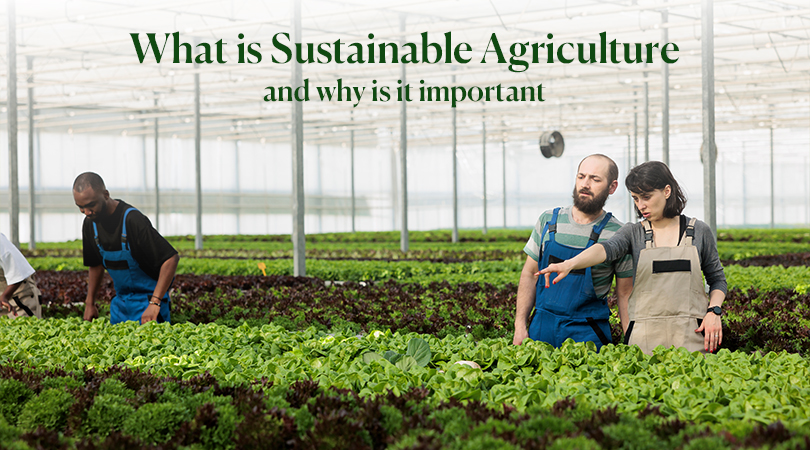
Sustainable Agriculture in the Age of AI: Why It Matters for the Future of Food
Agriculture feeds the global population — but it also shapes the planet’s environmental future. Food production accounts for a significant share of greenhouse gas emissions, freshwater usage, soil degradation, and biodiversity loss. As climate volatility intensifies and global demand for food continues to rise, traditional farming systems face mounting pressure.
Today, the challenge is no longer just increasing yield — it is achieving sustainable agriculture, where productivity, environmental responsibility, and long-term resilience coexist.
What Is Sustainable Agriculture?
Sustainable agriculture is a farming approach that balances three core pillars:
- Environmental health — protecting soil, water, air, and biodiversity
- Economic viability — ensuring farmers maintain profitable operations
- Social equity — supporting fair labor and resilient rural communities
Rather than maximizing short-term output, sustainable systems focus on long-term productivity, reduced environmental impact, and resource efficiency.
Soil Health: The Foundation of Sustainability
Healthy soil is the backbone of sustainable farming practices.
Conventional agriculture often relies on intensive tilling and chemical inputs, which degrade soil structure over time. Sustainable methods such as:
- Crop rotation
- Cover cropping
- Composting
- Reduced tillage
help restore soil fertility and improve carbon storage.
Healthier soils also enhance carbon sequestration, making agriculture part of the climate solution rather than the problem.
Efficient Resource Use Through Smart Farming
Water scarcity is a growing global concern. Sustainable agriculture integrates:
- Precision irrigation
- Rainwater harvesting
- Drought-resistant crops
With the rise of AI in agriculture, farmers can now use precision farming techniques powered by data. Smart irrigation systems, guided by sensors and satellite data, can reduce water usage by up to 30%.
Similarly, AI-powered nutrient mapping ensures fertilizers are applied only where needed — minimizing waste and reducing environmental runoff.
AI & Robotics in Sustainable Agriculture
AI and robotics are transforming how sustainability is implemented on farms.
Robotics in Farming
- Autonomous tractors reduce soil compaction
- Robotic harvesters improve efficiency
- AI-powered weeding robots reduce herbicide use by up to 90%
These innovations directly support sustainable farming technology by lowering chemical dependency and preserving soil biodiversity.
Data-Driven Farming: The New Agricultural Advantage
In modern agriculture, data is becoming as valuable as land or water.
Farm management systems now track:
- Yield performance
- Input efficiency
- Carbon footprint
- Market trends
This enables:
- climate-smart agriculture decisions
- Participation in carbon credit markets
- Transparent, traceable food supply chains
Climate Resilience & Predictive Agriculture
Climate change is already affecting agricultural productivity through unpredictable weather patterns.
AI-driven predictive analytics allows farmers to:
- Forecast droughts and rainfall
- Optimize planting cycles
- Select climate-resilient crops
This strengthens food security while reducing losses.
Reducing Emissions & Environmental Impact
Agriculture contributes significantly to:
- Methane (livestock)
- Nitrous oxide (fertilizers)
- CO₂ (land-use changes)
Sustainable practices combined with AI help reduce emissions through:
- Optimized fertilizer usage
- Smart livestock monitoring
- Reduced deforestation
When scaled, these practices can transform farms into carbon sinks.
Supporting Farmer Livelihoods
Sustainability is not only environmental — it must also be economically viable.
Models supporting farmers include:
- Direct-to-consumer sales
- Fair trade systems
- Cooperative farming
AI tools also reduce input costs and improve yield predictability, making sustainable agriculture more profitable.
Protecting Biodiversity
Monoculture farming reduces ecosystem diversity and increases vulnerability.
Sustainable agriculture promotes:
- Crop diversification
- Pollinator-friendly habitats
- Reduced chemical use
Biodiversity improves natural pest control and strengthens long-term farm stability.
Challenges & the Need for Inclusive Innovation
Despite its benefits, challenges remain:
- High initial cost of agri-tech solutions
- Limited access for smallholder farmers
- Knowledge and training gaps
Mobile-based AI tools and scalable solutions are emerging to bridge this divide.
Why Sustainable Agriculture Matters Now
Global food demand is expected to increase by over 50% by 2050.
Expanding farmland is not a viable solution.
The future lies in:
- Producing more with fewer resources
- Regenerating ecosystems
- Leveraging smart farming technologies
Sustainable agriculture connects:
- Climate action
- Food security
- Water conservation
- Rural development
A Systemic Shift Toward the Future
Sustainable agriculture is not a single method — it is a system-wide transformation.
It requires collaboration between:
- Farmers
- Policymakers
- Technology providers
- Consumers
Sustainable agriculture is a farming approach that protects the environment, supports farmers economically, and ensures long-term food production.
It helps reduce environmental damage, improves food security, and ensures resources are available for future generations.
AI is used for precision farming, crop monitoring, predictive analytics, and optimizing water and fertilizer usage.
Crop rotation, organic farming, precision irrigation, agroforestry, and reduced chemical usage.
Yes, AI improves efficiency, reduces waste, and helps farmers make data-driven decisions that lower environmental impact.