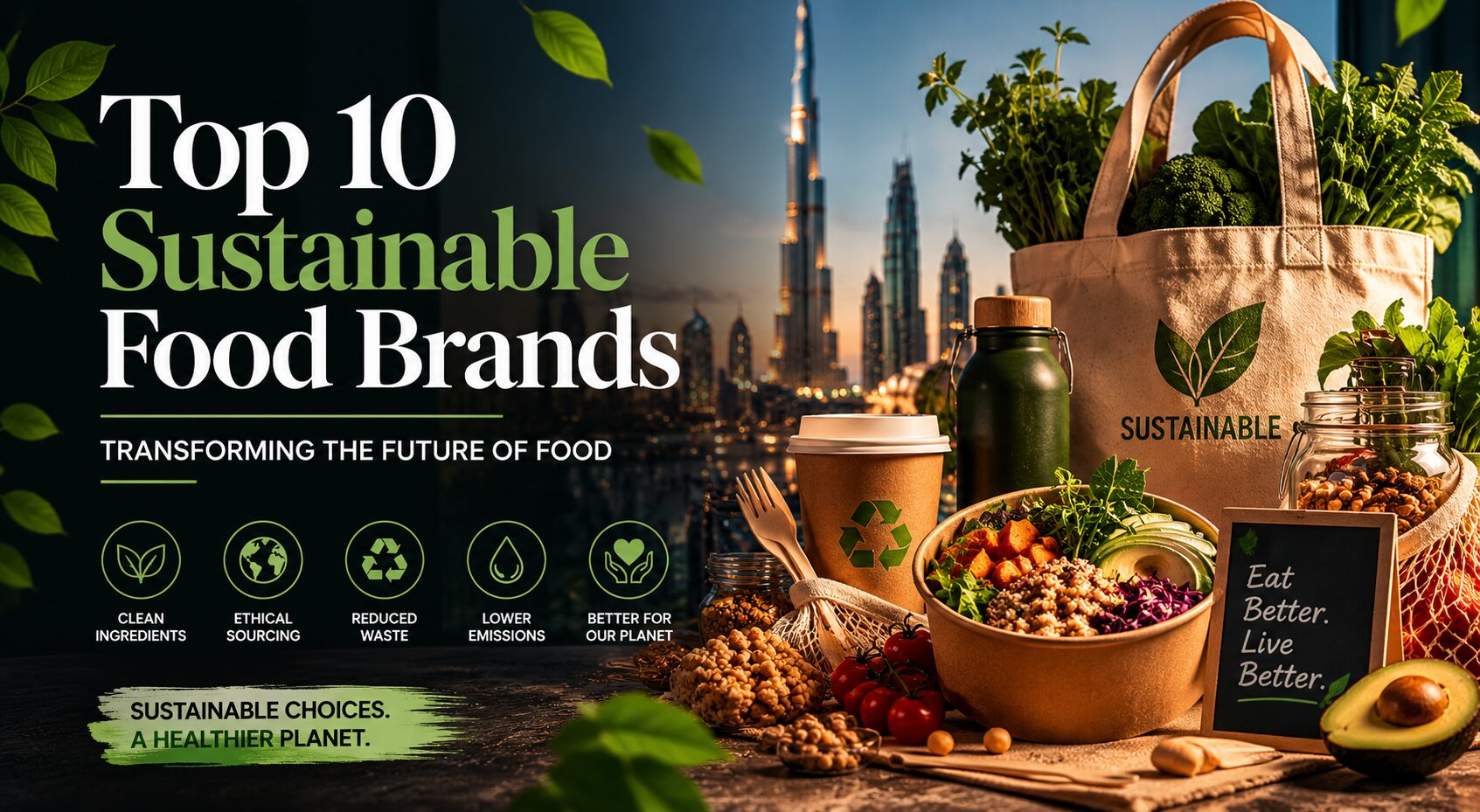
Top 10 Sustainable Food Brands Transforming the Future of Food in 2026
Sustainable food brands are companies that reduce environmental impact through plant-based innovation, ethical sourcing, reduced food waste, and eco-friendly packaging. In 2026, leading sustainable food brands like Beyond Meat, Oatly, and Impossible Foods are driving the global shift toward low-carbon, climate-friendly food systems.
Why Sustainable Food Brands Matter in 2026
Sustainable food is no longer a niche trend — it is becoming a global food system transformation.
According to the FAO (Food and Agriculture Organization), the global food system contributes nearly one-third of total greenhouse gas emissions, making food production one of the largest drivers of climate change.
At the same time, global consumer behavior is shifting rapidly:
- 60%+ of Gen Z consumers prefer sustainable food brands (Nielsen report trend insights)
- UAE consumers are increasingly choosing eco-friendly, organic, and plant-based foods
- Governments like the UAE are pushing net-zero and climate-friendly food systems under the UAE Net Zero 2050 strategy
This shift is driving demand for:
- plant-based food brands
- climate-friendly food companies
- sustainable grocery brands
- low-carbon food production systems
- ethical sourcing and clean-label products
What Makes a Food Brand Sustainable?
A sustainable food brand typically focuses on:
- Reduced carbon emissions in production
- Plant-based or low-impact ingredients
- Ethical sourcing of raw materials
- Water conservation
- Food waste reduction
- Sustainable packaging solutions
- Circular economy practices
These factors define the future of climate-conscious food systems.
Top 10 Sustainable Food Brands in 2026
1. Beyond Meat (USA)
Beyond Meat is a global leader in plant-based protein innovation and alternative meat production.
Sustainability Focus:
- Reduced land and water usage
- Lower greenhouse gas emissions
- Plant-based meat alternatives
Impact:
Helps reduce dependency on industrial livestock farming, one of the largest contributors to methane emissions.
2. Oatly (Sweden)
Oatly is one of the most recognized sustainable dairy alternatives brands globally.
Sustainability Focus:
- Oat-based milk with lower environmental footprint
- Reduced water usage vs dairy milk
- Climate-friendly production processes
3. Impossible Foods (USA)
Impossible Foods uses biotechnology to create science-based plant protein alternatives.
Sustainability Focus:
- Reduced livestock dependency
- Lower carbon emissions
- Efficient land usage
4. Kibsons (UAE)
Kibsons is a leading UAE grocery platform focused on sustainable grocery delivery and food waste reduction.
Sustainability Focus:
- Reduced food waste systems
- Sustainable packaging initiatives
- Local sourcing optimization
📍 Strong presence in Dubai & Abu Dhabi sustainable grocery ecosystem.
5. Wild & The Moon (UAE)
A Dubai-based organic plant-based food brand focused on clean eating and wellness.
Sustainability Focus:
- Organic ingredients
- Minimal processing
- Low-impact sourcing
6. Just Salad (Global)
Just Salad is known for its carbon labeling system and reusable bowl program.
Sustainability Focus:
- Food carbon footprint tracking
- Reusable packaging programs
- Waste reduction initiatives
7. Talabat (Sustainable Delivery Initiatives – UAE)
Talabat is integrating sustainability into food delivery operations.
Sustainability Focus:
- Eco-friendly packaging experiments
- Delivery route optimization
- Reduced packaging waste initiatives
8. The Brooklyn Creamery (India/UAE)
A better-for-you dessert brand focused on low-calorie and conscious indulgence products.
Sustainability Focus:
- Health-focused formulations
- Reduced sugar and calorie impact
- Conscious consumption positioning
9. Starbucks (Global)
Starbucks is a major global food and beverage company investing in sustainability transformation.
Sustainability Focus:
- Ethical coffee sourcing
- Reusable cup programs
- Store energy efficiency
10. Carrefour UAE
Carrefour is a leading retail brand promoting sustainable grocery retail systems in the UAE.
Sustainability Focus:
- Local sourcing programs
- Food waste reduction campaigns
- Plastic reduction initiatives
Key Trends in Sustainable Food Industry (2026)
1. Rise of Plant-Based Food Systems
Plant-based food demand continues to grow globally due to climate and health awareness.
2. Food Tech & Alternative Proteins
Lab-grown meat and biotech food innovation are reshaping food production.
3. Carbon Labeling on Food Products
Brands are increasingly showing carbon footprint labels to influence purchasing decisions.
4. Sustainable Grocery Delivery in UAE
Platforms like Kibsons and Talabat are integrating eco-logistics systems.
5. Zero-Waste Food Packaging
Compostable and recyclable packaging is becoming a standard requirement.
Market Insight (Important Statistic)
📊 The global plant-based food market is projected to surpass $77 billion by 2027, driven by sustainability, health awareness, and climate change concerns.
Why Sustainable Food Brands Matter for UAE Consumers
The UAE market is one of the fastest-growing regions for:
- organic food demand
- plant-based diets
- sustainable grocery platforms
- eco-conscious restaurant brands
This aligns with Dubai’s broader vision for:
- smart cities
- climate neutrality
- sustainable consumption ecosystems
Sustainable food brands are companies that reduce environmental impact through ethical sourcing, plant-based products, and eco-friendly production systems.
They help reduce carbon emissions, conserve water, minimize food waste, and support climate-friendly food systems.
Top brands include Beyond Meat, Oatly, Impossible Foods, Kibsons, and Wild & The Moon.
Yes, plant-based foods generally require less land, water, and energy compared to animal-based products.
Some sustainable products are priced higher due to production costs, but prices are decreasing as demand increases.

Sourabh is an SEO Specialist associated with The Sustainable Brands Journal, contributing to the platform’s mission of amplifying sustainability-driven narratives. He specializes in content optimization, search strategy, and organic growth within climate, ESG, and eco-conscious industries.