Best Kids’ Shows About Sustainability & Climate Education (2026 Guide)
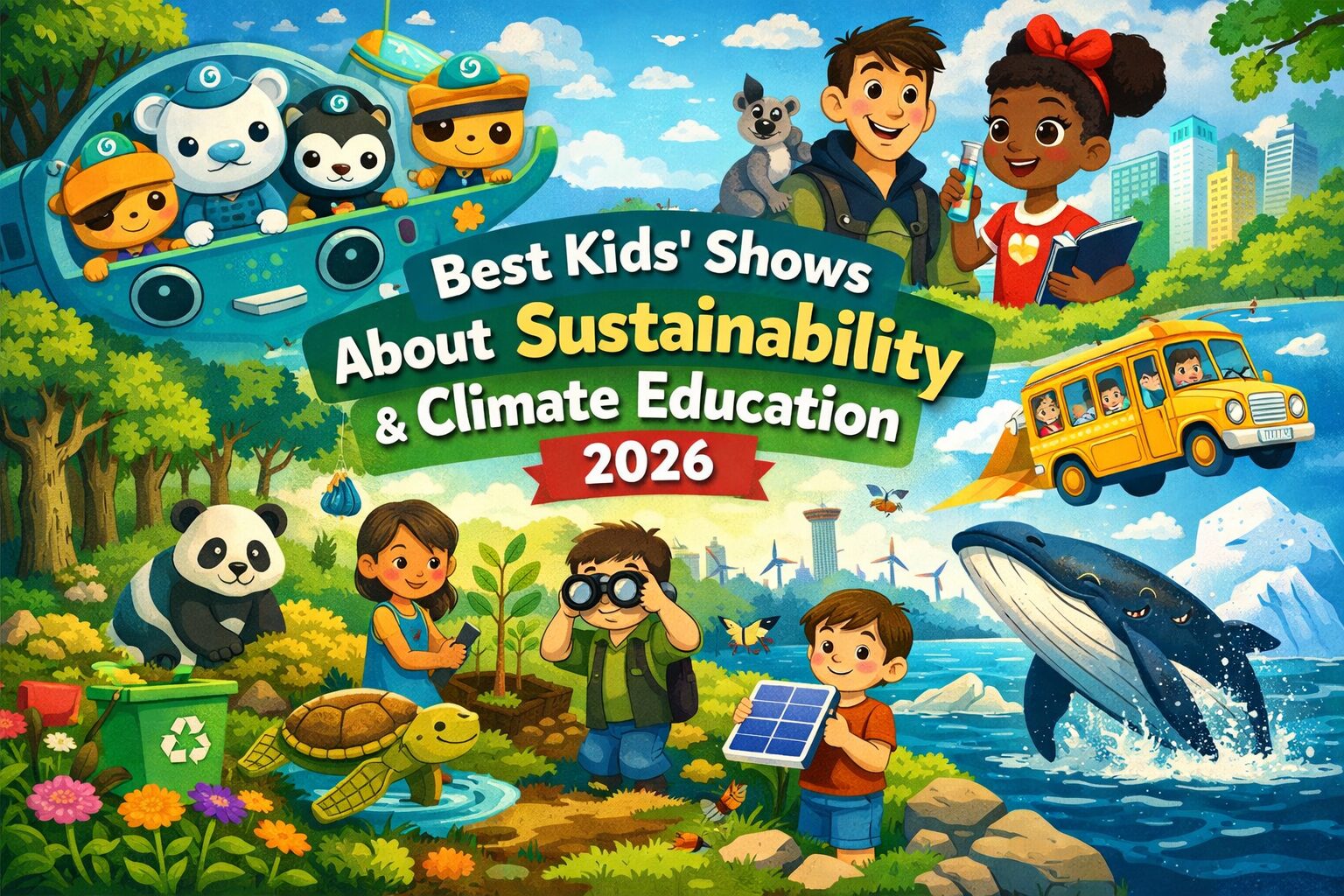
The best kids’ shows about sustainability in 2026 include Octonauts: Above & Beyond, Wild Kratts, The Magic School Bus Rides Again, Ada Twist, Scientist, and Planet Earth III — each teaching climate concepts through age-appropriate storytelling.
Teaching children about sustainability is no longer optional, it’s essential. As climate challenges intensify, early education plays a critical role in shaping environmentally conscious future generations.
In 2026, children’s media is stepping up. A growing number of shows are blending entertainment with climate education, helping kids understand everything from recycling to biodiversity in ways that feel engaging, not overwhelming. Here’s a curated guide to some of the best kids shows focused on sustainability and climate awareness.
What Is Climate Education for Kids?
Climate education for children means teaching environmental awareness, sustainability habits, and ecological responsibility in age-appropriate ways.
It focuses on:
- Understanding nature and ecosystems
- Learning cause-and-effect (pollution, waste, conservation)
- Building problem-solving and empathy toward the planet
Organizations like World Wildlife Fund and Natural Resources Defense Council emphasize early environmental education as critical to long-term behavior change.
🎬 Best Kids’ Shows Teaching Sustainability (2026)
1. Octonauts: Above & Beyond
Best for: Ages 3–8 | Platform: Netflix
👉 The best kids’ show for learning about environmental rescue missions.
What it teaches:
- Climate change impacts on habitats
- Wildlife conservation
- Problem-solving during environmental crises
Why it works:
Short, mission-based storytelling simplifies complex topics like melting ice caps and extreme weather.
2. Wild Kratts
Best for: Ages 4–8 | Platform: PBS Kids
👉 The best show for understanding biodiversity and ecosystems.
What it teaches:
- Species protection
- Ecosystem balance
- Human impact on wildlife
Why it works:
Backed by real science, making it ideal for foundational environmental learning.
3. Ada Twist, Scientist
Best for: Ages 4–8 | Platform: Netflix
👉 The best show for building future climate problem-solvers.
What it teaches:
- Curiosity-driven science
- Innovation and experimentation
- Early STEM thinking
Why it works:
It shows that solutions to climate problems begin with curiosity.
4. Planet Earth III
Best for: Ages 8–12 | Platform: BBC / streaming platforms
👉 The best show for real-world climate awareness.
What it teaches:
- Habitat loss
- Climate urgency
- Interconnected ecosystems
Why it works:
Visually powerful storytelling builds emotional connection with the planet.
5. The Magic School Bus Rides Again
Best for: Ages 5–9 | Platform: Netflix
👉 The best show for learning sustainability through fun science adventures.
What it teaches:
- Renewable energy
- Pollution and waste
- Earth systems
Why it works:
Gamified exploration makes sustainability engaging rather than overwhelming.
🧩 Comparison Table (Quick Decision Guide)
| Show | Ages | Platform | Core Topic | Eco-Anxiety Risk |
|---|---|---|---|---|
| Octonauts: Above & Beyond | 3–8 | Netflix | Habitat loss, conservation | Low |
| Wild Kratts | 4–8 | PBS Kids | Biodiversity, ecosystems | Low |
| Ada Twist, Scientist | 4–8 | Netflix | STEM, problem-solving | Very Low |
| Planet Earth III | 8–12 | BBC/Max | Climate realities | Medium |
| Magic School Bus Rides Again | 5–9 | Netflix | Renewable energy, pollution | Low |
Best Sustainability Shows by Age Group
Ages 2–4 (Toddlers)
- Trash Truck
👉 Best for learning recycling through gentle storytelling
Ages 4–8
- Wild Kratts
- Ada Twist, Scientist
- Octonauts
👉 Focus: ecosystems, animals, curiosity
Ages 8–12
- Planet Earth III
👉 Focus: real-world climate systems and consequences
Where to Watch These Shows
- Netflix – Most modern educational shows
- PBS Kids – Free access to science-based content
- BBC – High-quality nature documentaries
📊 Why Climate Education Through Media Matters
- Over 1 million species are at risk of extinction (IPBES global assessment)
- Climate education builds long-term sustainable behavior
👉 A 2022 study in Environmental Education Research found:
Children exposed to pro-environmental media showed higher conservation behavior and intent.
What Parents Should Avoid
- Fear-based climate narratives without solutions
- Overly complex or anxiety-inducing content
- Lack of actionable takeaways
👉 Choose shows that are hopeful, solution-driven, and empowering.
How Parents & Educators Can Use These Shows
- Co-watch and discuss episodes
- Connect lessons to real-life habits (recycling, saving water)
- Encourage curiosity and questions
- Turn episodes into small eco-actions
Entertainment becomes education when paired with action.
Final Takeaway
Raising environmentally conscious children doesn’t require complex lessons—it starts with what they watch.
The right shows:
- Simplify climate concepts
- Build empathy for nature
- Inspire small, meaningful actions
👉 Today’s content shapes tomorrow’s mindset.
By choosing the right sustainability-focused shows, parents and educators can turn screen time into climate education—and awareness into action.
For ages 2–4, Trash Truck teaches recycling through playful storytelling with minimal scary content.
Wild Kratts streams free on PBS Kids. Others like Octonauts: Above & Beyond require Netflix.
Yes. A 2022 study in Environmental Education Research found children who consumed pro-environmental media showed measurably higher conservation behavior and intent.
Experts recommend ages 5–7 for basic concepts like recycling and nature care, and ages 9–12 for deeper climate systems understanding.
Avoid content that presents climate change as catastrophic without solutions, as it can cause eco-anxiety. Choose hopeful, action-oriented storytelling.

Sourabh is an SEO Specialist associated with The Sustainable Brands Journal, contributing to the platform’s mission of amplifying sustainability-driven narratives. He specializes in content optimization, search strategy, and organic growth within climate, ESG, and eco-conscious industries.