
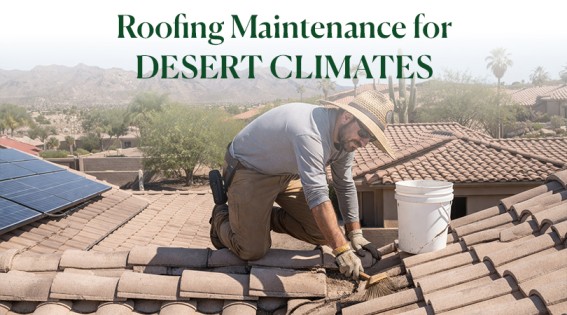
Roofing Maintenance for Desert Climates: A Practical Guide to Protecting Your Roof
Living in a desert climate isn’t just tough on people—it’s even tougher on your roof.
Relentless sun, extreme heat during the day, sudden temperature drops at night, and abrasive sandstorms all work together to wear down roofing materials faster than in any other environment.
The good news? With the right maintenance strategy, you can significantly extend your roof’s lifespan, reduce repair costs, and improve your home’s energy efficiency.
Let’s break it down in a simple, practical way.
What Makes Desert Roofs So Vulnerable?
Desert environments create a unique combination of stress factors:
- Intense UV radiation slowly breaks down roofing materials
- Thermal expansion and contraction causes cracks over time
- Sand and dust abrasion acts like sandpaper on surfaces
- Low humidity + sudden cooling leads to material brittleness
- Occasional heavy rain can expose weak drainage systems
👉 In short: your roof doesn’t fail suddenly—it deteriorates silently.
How Often Should You Roofing Maintenance for Desert Climates
Roof maintenance in desert climates should be done at least twice a year, along with inspections after major sandstorms or heavy rain.
1. Schedule Regular Roof Inspections
Think of inspections as your first line of defense.
Check your roof:
- Every 6 months
- After sandstorms or strong winds
Look for:
- Hairline cracks or surface blisters
- Loose tiles or lifted edges
- Faded or brittle materials
- Dust buildup around drains
👉 Catching small issues early can prevent expensive structural damage.
Keep Your Roof Clean (More Important Than You Think)
In desert regions, dirt isn’t just cosmetic—it’s destructive.
Over time, sand and debris:
- Trap heat and increase surface temperature
- Block drainage systems
- Speed up material wear
Best cleaning methods:
- Soft brushing
- Low-pressure washing
- Routine debris removal after storms
⚠️ Avoid high-pressure cleaning—it can strip protective layer
Protect Your Roof with Reflective & Elastomeric Coatings
If there’s one upgrade that makes a huge difference—it’s this.
Cool roof coatings (like elastomeric or silicone):
- Reflect sunlight instead of absorbing it
- Reduce roof surface temperature
- Improve indoor cooling efficiency
- Extend roof lifespan
👉 In hot climates, this can directly lower your energy bills.
Pro Tip: Reapply coatings every 3–5 years depending on exposure.
Pay Special Attention to Sealing & Flashing
Sealants are often the first thing to fail in extreme heat.
Inspect:
- Roof joints
- Flashings around vents and chimneys
- Edges and seams
If you notice:
- Cracking
- Dryness
- Peeling
→ Reapply sealant immediately to prevent leaks.
Ensure Proper Roof Ventilation
Heat doesn’t just hit your roof—it builds up inside it.
Without proper ventilation:
- Internal temperatures rise
- Materials warp or weaken
- Energy costs increase
Good ventilation helps:
- Regulate temperature
- Prevent moisture buildup
- Improve overall durability
Flat Roofs Need Extra Care in Desert Climates
Flat roofs are common—but they require more attention.
Key issues:
- Ponding water after rare rainfalls
- Membrane damage from UV exposure
- Drainage blockages from dust buildup
Maintenance tips:
- Keep drainage systems clear
- Inspect for cracks in membranes (TPO, EPDM, bitumen)
- Ensure proper slope for water runoff
👉 Ignoring flat roof maintenance is one of the most common (and costly) mistakes.
Choose the Right Roofing Materials
If you’re building or upgrading, material choice matters more than anything.
Best options for desert climates:
- Clay or concrete tiles → Excellent heat resistance
- Metal roofing (reflective coated) → Durable and energy-efficient
- TPO or modified bitumen → Ideal for flat roofs
- Built-Up Roofing (BUR) → Strong multi-layer protection
👉 The right material reduces maintenance needs from day one.
Understand Thermal Shock (The Silent Roof Killer)
Desert roofs expand in extreme heat and contract quickly at night.
This constant movement causes:
- Micro-cracks
- Structural stress
- Gradual weakening
How to reduce impact:
- Use flexible materials (like elastomeric coatings)
- Maintain proper insulation
- Conduct regular inspections
When Should You Call a Professional?
DIY maintenance works—but not always.
Call a roofing expert if you notice:
- Deep or spreading cracks
- Water leakage or stains
- Sagging areas
- Repeated damage despite repairs
👉 Professional inspections can uncover hidden issues before they become major problems.
The Energy Efficiency Advantage
A well-maintained desert roof doesn’t just last longer—it performs better.
Benefits include:
- Lower indoor temperatures
- Reduced AC usage
- Lower electricity bills
- Improved home comfort
👉 In extreme climates, your roof plays a direct role in your energy costs.
Conclusion
Roof maintenance in desert climates isn’t optional—it’s essential.
The combination of heat, UV exposure, and abrasive sand can quickly shorten your roof’s lifespan if ignored.
But with the right approach—
regular inspections, proper cleaning, protective coatings, and smart material choices—you can stay ahead of damage and avoid costly repairs.
Because in desert conditions, prevention isn’t just better than repair— it’s the only strategy that truly works. 🌵
Roof maintenance in desert climates should be done at least twice a year, along with inspections after sandstorms or heavy rain.
Clay tiles, metal roofing with reflective coatings, TPO membranes, and built-up roofing are among the best options for desert climates due to their heat and UV resistance.
Using reflective or elastomeric roof coatings, ensuring proper ventilation, and choosing heat-resistant materials can protect roofs from extreme desert heat.
Yes, cool roof coatings reflect sunlight, reduce heat absorption, improve energy efficiency, and extend the lifespan of roofing materials in hot climates.
UV radiation, thermal expansion and contraction, sand abrasion, and poor drainage are the main factors that damage roofs in desert climates.

Sourabh is an SEO Specialist associated with The Sustainable Brands Journal, contributing to the platform’s mission of amplifying sustainability-driven narratives. He specializes in content optimization, search strategy, and organic growth within climate, ESG, and eco-conscious industries.