Sustainable Waste Management in 2026: How AI is Transforming E-Waste into Circular Value
Sustainable waste management in 2026 is being transformed by AI-powered e-waste solutions that improve recycling, material recovery, and waste prediction. By enabling smart sorting, extending product lifecycles, and supporting circular economy models, AI helps reduce environmental impact while maximizing resource efficiency and economic value.
Sustainable Waste Management: The Future of AI-Powered E-Waste Solutions
Sustainable waste management has become a global priority as electronic waste (e-waste) surpasses 60 million tonnes annually, making it the fastest-growing waste stream worldwide. With rising digital consumption and shorter device lifecycles, traditional waste systems are no longer sufficient.
Today, Artificial Intelligence (AI) is redefining sustainable waste management by enabling smarter recycling, efficient resource recovery, and circular economy integration. This shift is transforming waste from a liability into a valuable resource.
👉 As highlighted in emerging innovations like climate-tech startups to watch, AI-driven waste solutions are rapidly gaining traction across industries.
Key Takeaways
- Sustainable waste management is shifting toward AI-powered systems
- E-waste recycling and recovery are key to circular economy growth
- AI improves sorting, prediction, and material extraction
- Circular tech reduces environmental impact and resource dependency
- Governments and businesses are investing heavily in smart waste solutions
The E-Waste Crisis in Sustainable Waste Management
E-waste is not just waste—it’s a complex mix of valuable and hazardous materials.
Key Facts:
- Less than 20% of global e-waste is formally recycled
- Contains valuable materials like gold, copper, and rare earth metals
- Also includes toxic substances like lead and mercury
Environmental Impact:
- Soil and water contamination
- Health risks for communities
- Loss of reusable resources
👉 Effective sustainable waste management systems must focus not just on disposal, but on recovery, reuse, and recycling.
How AI is Transforming Sustainable Waste Management
AI is bringing intelligence, automation, and scalability to waste systems.
1. Smart Waste Sorting & Recycling
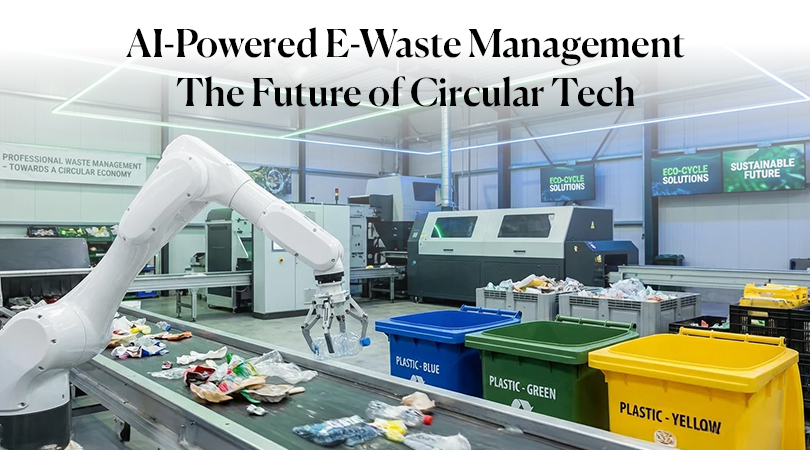
AI-powered robots can:
- Identify electronic components with precision
- Separate valuable materials efficiently
- Improve recycling accuracy and speed
Impact:
- Higher recovery rates
- Reduced human error
- Lower operational costs
2. Predictive Waste Analytics
AI enables:
- Forecasting of e-waste generation trends
- Smarter infrastructure planning
- Optimized collection systems
Result:
Sustainable waste management becomes proactive rather than reactive.
3. Automated Material Recovery
AI systems can detect:
- Precious metals within devices
- Reusable components
Benefit:
- Maximizes resource extraction
- Reduces dependence on mining
👉 Similar innovations are being explored by top green tech companies to watch, focusing on resource efficiency and circular systems.
4. Extending Product Lifecycles
AI supports:
- Device diagnostics
- Predictive maintenance
- Repair recommendations
Outcome:
- Reduced waste generation at source
- Longer product usability
- Lower environmental footprint
The Role of Circular Economy in Sustainable Waste Management
Sustainable waste management is deeply connected to the circular economy model, where products are:
- Reused
- Repaired
- Recycled
- Reintegrated into production
Traditional Model vs Circular Model
| Linear Economy | Circular Economy |
|---|---|
| Take → Make → Dispose | Reuse → Repair → Recycle |
| High waste generation | Minimal waste |
| Resource depletion | Resource optimization |
👉 Many sustainable startups you should know about right now are already building circular solutions that turn waste into value.
Real-World Applications of AI in Waste Management
- Smart recycling plants using AI vision systems
- Urban waste tracking and optimization platforms
- Automated e-waste dismantling facilities
- Circular supply chains for electronics
These applications are accelerating the shift toward scalable sustainable waste management systems.
Challenges in Implementing Sustainable Waste Management
Despite innovation, key challenges remain:
- High initial investment in AI infrastructure
- Limited recycling systems in developing regions
- Lack of consumer awareness and participation
However:
With increasing ESG regulations and climate policies, adoption is rapidly improving.
Why Sustainable Waste Management Matters in 2026
- E-waste is growing faster than any other waste stream
- Resource scarcity is increasing
- Regulations are becoming stricter
- Consumers demand responsible practices
👉 Sustainable waste management is no longer optional—it’s a business and environmental necessity.
How Businesses Can Adopt Sustainable Waste Management
- Implement AI-powered waste tracking systems
- Partner with certified e-waste recyclers
- Build circular product design strategies
- Invest in ESG and sustainability reporting tools
Conclusion
Sustainable waste management is evolving from a waste disposal system into a resource optimization engine.
With AI-driven innovation, businesses and governments can:
- Reduce environmental impact
- Recover valuable materials
- Build scalable circular systems
Because the future of waste isn’t disposal—it’s intelligent, sustainable transformation ♻️
FAQ
Sustainable waste management involves reducing, reusing, recycling, and recovering waste in ways that minimize environmental impact while maximizing resource efficiency and long-term sustainability.
AI improves waste management by enabling smart sorting, predictive analytics, and automated material recovery, making recycling more efficient and scalable.
E-waste contains hazardous materials and valuable resources. Improper disposal leads to pollution and resource loss, making it a critical focus area for sustainable waste management.
The circular economy reduces waste by keeping materials in use through reuse, repair, and recycling, making it essential for sustainable waste management.
Yes, businesses can generate revenue through recycling, material recovery, and circular models while reducing costs and meeting ESG requirements.
Industries like electronics, manufacturing, construction, and retail benefit significantly from sustainable waste management practices.

Sourabh is an SEO Specialist associated with The Sustainable Brands Journal, contributing to the platform’s mission of amplifying sustainability-driven narratives. He specializes in content optimization, search strategy, and organic growth within climate, ESG, and eco-conscious industries.