Top 10 Sustainable Agriculture Companies Leading the Future of Farming
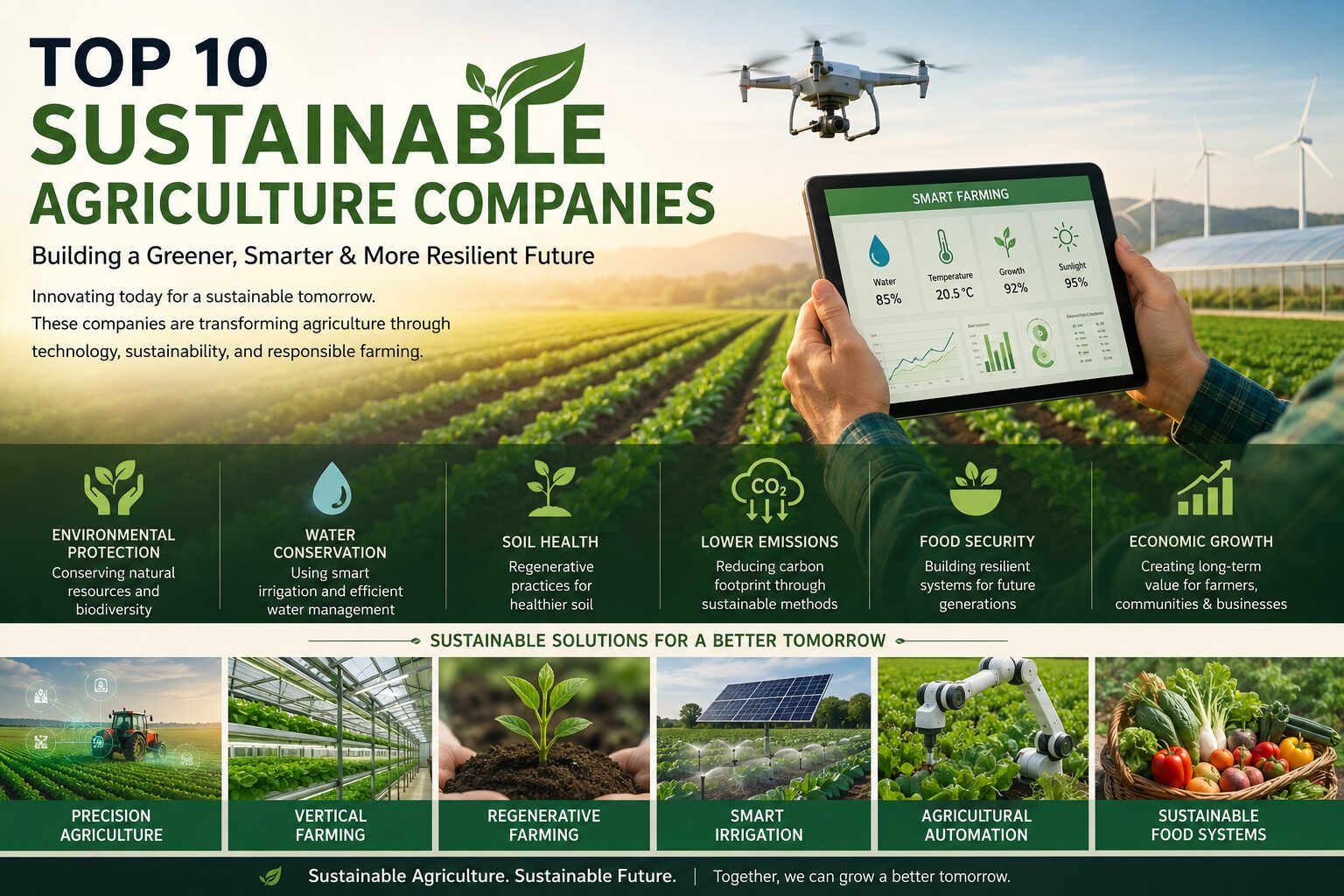
Sustainable agriculture companies are transforming global food systems through regenerative farming, precision agriculture, vertical farming, and climate-smart technologies. Leading companies like Indigo Ag, Plenty, and Yara International are reducing emissions, conserving water, and building more sustainable and resilient farming systems for the future.
Why Sustainable Agriculture Matters in 2026
As the global population continues to grow, demand for food production is rising rapidly. At the same time, climate change, water scarcity, soil degradation, and carbon emissions are forcing the agriculture industry to rethink traditional farming methods.
This is where sustainable agriculture companies, regenerative farming businesses, and climate-smart agriculture innovators are making a major impact.
Sustainable agriculture focuses on:
- Protecting ecosystems
- Conserving natural resources
- Improving soil health
- Reducing agricultural emissions
- Supporting long-term food security
From precision agriculture and AI-powered farming systems to vertical farming companies and eco-friendly fertilizers, businesses worldwide are reshaping the future of food production.
Key Takeaway
- Sustainable agriculture companies reduce environmental impact while improving food production
- Regenerative farming and precision agriculture are major industry trends
- Vertical farming and indoor agriculture use significantly less water and land
- AI and agri-tech are accelerating climate-smart farming solutions
- Sustainable food systems are becoming essential for long-term global food security
Sustainable Agriculture Industry Trends in 2026
According to industry reports:
- The global sustainable agriculture market is projected to grow rapidly through 2030
- Precision agriculture adoption is increasing due to AI and IoT integration
- Regenerative agriculture is becoming central to ESG and climate strategies
- Vertical farming investments continue to rise globally
Key Trends Driving Sustainable Farming:
- Regenerative agriculture
- Climate-resilient crops
- AI-powered farming systems
- Sustainable food alternatives
- Smart irrigation technology
- Carbon farming initiatives
Top 10 Sustainable Agriculture Companies in 2026
1. Indigo Ag
Indigo Ag is one of the leading sustainable farming companies focused on carbon-positive agriculture and regenerative farming solutions.
The company combines biological technology, AI-driven analytics, and carbon farming programs to improve crop productivity while reducing environmental impact.
Key Sustainability Initiatives:
- Carbon farming programs
- Soil health improvement
- Water conservation
- Sustainable crop production
- Regenerative agriculture support
👉 Indigo Ag is also helping farmers generate carbon credits through sustainable farming practices.
2. Plenty
Plenty is revolutionizing urban agriculture through advanced vertical farming systems.
The company grows crops indoors using:
- Less water
- Less land
- Controlled-environment agriculture technology
Sustainability Focus:
- Reduced water usage
- Pesticide-free farming
- Lower transportation emissions
- Sustainable indoor food production
Vertical farming is rapidly becoming one of the most important trends in climate-smart agriculture.
3. AeroFarms
AeroFarms is globally recognized for its innovative indoor farming technology and aeroponic agriculture systems.
Key Innovations:
- Soil-free farming
- LED-based crop growth
- Minimal water consumption
- Sustainable urban agriculture
The company is considered a pioneer in climate-resilient agriculture and resource-efficient food systems.
4. Pivot Bio
Pivot Bio develops sustainable alternatives to synthetic fertilizers using microbial nitrogen technology.
Environmental Benefits:
- Reduced nitrogen pollution
- Lower greenhouse gas emissions
- Improved soil health
- Sustainable crop nutrition
The company is helping reduce agriculture’s dependence on chemical fertilizers while supporting low-carbon farming.
5. AppHarvest
AppHarvest focuses on high-tech greenhouse farming powered by sustainability-driven infrastructure.
Sustainability Initiatives:
- Rainwater recycling
- Energy-efficient farming
- Reduced food waste
- Localized food production
Controlled-environment agriculture is becoming critical for future food security and sustainable farming.
6. Beyond Meat
Beyond Meat contributes significantly to sustainable agriculture by reducing dependence on livestock farming.
Sustainability Impact:
- Reduced land usage
- Lower carbon emissions
- Water conservation
- Sustainable protein alternatives
Plant-based food innovation is rapidly transforming global sustainable food systems.
7. Corteva Agriscience
Corteva Agriscience focuses on:
- Sustainable crop protection
- Precision agriculture
- Climate-smart farming solutions
Sustainability Goals:
- Regenerative farming support
- Soil conservation
- Smart agriculture technology
- Sustainable seed innovation
The company is heavily investing in agricultural sustainability research and AI-powered farming systems.
8. Yara International
Yara International works toward sustainable food production through eco-friendly fertilizers and digital farming technologies.
Areas of Focus:
- Green ammonia production
- Low-carbon fertilizers
- Precision farming tools
- Sustainable crop management
Yara is actively investing in climate-friendly agriculture technologies globally.
9. Driscoll’s
Driscoll’s is recognized for implementing sustainable farming methods across its berry supply chain.
Key Initiatives:
- Water efficiency programs
- Responsible sourcing
- Pollinator protection
- Soil health management
Consumers increasingly expect sustainable sourcing and ethical farming practices from food brands.
10. Oatly
Oatly promotes sustainable agriculture through plant-based dairy alternatives with lower environmental impact.
Environmental Advantages:
- Reduced greenhouse gas emissions
- Lower water usage
- Sustainable crop sourcing
- Climate-conscious production
The rise of plant-based agriculture is becoming central to future sustainable food innovation.
Why Sustainable Agriculture is Essential
Traditional farming practices often contribute to:
- Deforestation
- Water pollution
- Soil degradation
- Biodiversity loss
- High carbon emissions
Sustainable agriculture companies are solving these challenges through:
- Regenerative agriculture
- Smart irrigation systems
- Precision farming technology
- AI-powered crop monitoring
- Climate-resilient food systems
Future of Sustainable Agriculture
The future of farming will increasingly focus on:
Emerging Agriculture Trends:
- Regenerative agriculture
- Precision agriculture technology
- AI-powered smart farming
- Vertical farming systems
- Climate-smart agriculture
- Sustainable food alternatives
- Carbon farming initiatives
Consumers are also becoming more conscious about:
- Food sourcing
- Sustainable farming methods
- Ethical food production
- Environmental impact
This is accelerating demand for eco-friendly agriculture companies and sustainable food brands.
Final Thoughts
Sustainable agriculture companies are reshaping the future of global food systems.
From:
- Indoor farming
- Regenerative agriculture
- AI-powered precision farming
- Eco-friendly fertilizers
- Plant-based innovation
👉 These companies are proving that food production can be both profitable and environmentally responsible.
As climate concerns continue to rise, sustainable agriculture will become one of the most important industries driving:
- Environmental sustainability
- Food security
- Climate resilience
- Green economic growth
Because the future of farming is no longer just about producing more food—
it’s about producing it more sustainably. 🌱
Sustainable agriculture companies focus on environmentally responsible farming practices that reduce emissions, conserve water, improve soil health, and support long-term food security.
Leading sustainable agriculture companies include Indigo Ag, Plenty, AeroFarms, Pivot Bio, Yara International, Corteva Agriscience, and Beyond Meat.
Regenerative agriculture focuses on restoring soil health, increasing biodiversity, and reducing environmental impact through sustainable farming techniques.
AI improves farming efficiency through crop monitoring, predictive analytics, precision irrigation, and automated resource management.
Vertical farming reduces land use, conserves water, lowers transportation emissions, and enables climate-resilient food production.
Climate-smart agriculture refers to farming methods designed to reduce emissions, improve resilience to climate change, and increase sustainable food production.
Sustainable agriculture helps address food security, climate change, water scarcity, and environmental degradation while supporting long-term economic resilience.

Sourabh is an SEO Specialist associated with The Sustainable Brands Journal, contributing to the platform’s mission of amplifying sustainability-driven narratives. He specializes in content optimization, search strategy, and organic growth within climate, ESG, and eco-conscious industries.